Leonardo Glauso: dove pittura, scultura e fotografia si incontrano — tra luce, forma e colore
Before the viewer recognizes a figure, Leonardo Glauso's work conveys a profound sense of balance. Every element seems to have found its place through a process of reduction, as though the image had been stripped of everything nonessential. A single line defines a presence, a field of color constructs space, a sculptural volume suggests the weight of a body. Nothing is redundant; nothing seeks to dominate. It is precisely this essentiality that defines a practice moving fluidly between painting, sculpture, photography, and drawing while maintaining remarkable visual and conceptual coherence.
Born in Florence in 1989, Glauso studied Graphic Design at the Libera Accademia di Belle Arti before continuing his education at the Scuola Internazionale di Fotografia. Before fully dedicating himself to his artistic practice, he worked as a photographer, collaborating with international agencies and publications including GQ, Icon, and EL PAÍS. Rather than belonging to a previous chapter of his career, photography remains an integral part of his artistic vision. His sensitivity to light, composition, and visual balance continues to shape every aspect of his work, regardless of the medium.
The multidisciplinary nature of Glauso's practice is not what defines it most. What is truly striking is the continuity that connects different artistic languages. Painting, photography, sculpture, and drawing do not coexist as separate disciplines but as complementary means of exploring a single reflection on the human figure, memory, and presence. Materials change, spatial relationships evolve, yet the intention remains the same: to create essential images capable of communicating beyond description.
Within Glauso's work, the human figure is never approached as portraiture. Faces rarely suggest a specific identity, bodies belong to no particular narrative, and gestures appear suspended in an undefined time. The figure relinquishes individuality to become a symbol—an open presence in which viewers may recognize something of their own experience. Rather than representing someone, these images evoke a shared human condition.
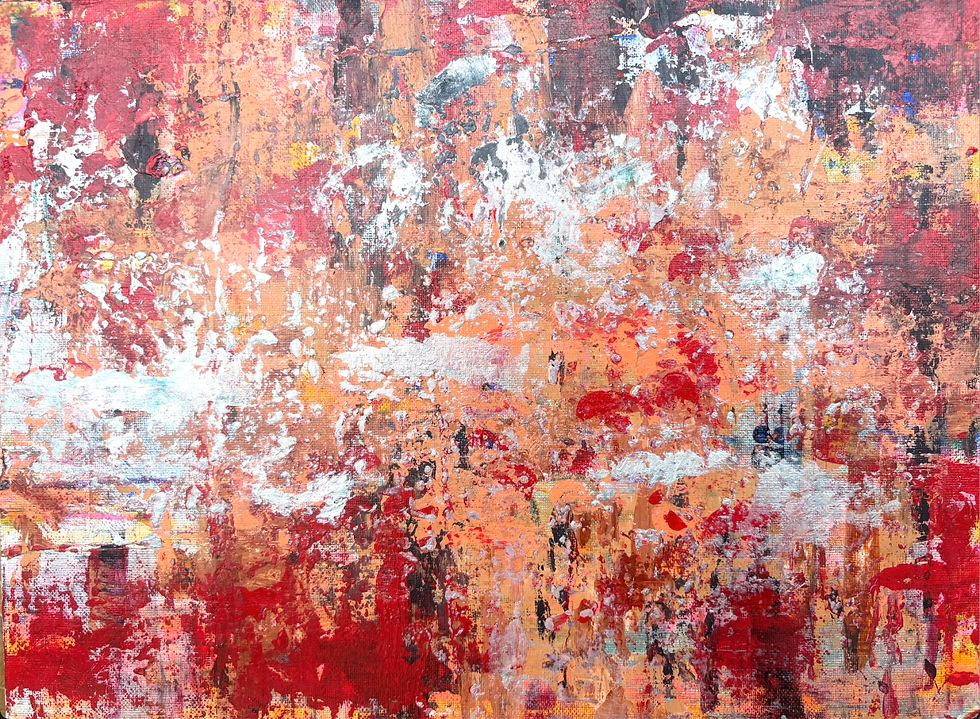
This approach becomes particularly evident in his paintings. Broad fields of color, simplified silhouettes, and the disciplined use of line create compositions that continuously oscillate between abstraction and recognizability. The image is immediately accessible, yet it resists a single reading. Each work invites the viewer to pause, allowing meaning to emerge gradually through the relationship between color, form, and space.
Formal synthesis should not be mistaken for simplification. On the contrary, every element that is removed strengthens the presence of what remains. A line does not describe a face; it suggests its presence. Color does not merely cover a figure; it determines its rhythm. Even empty space plays an active role, contributing to the overall balance of the composition. It is a visual language built on precision rather than accumulation, relying on a limited number of elements to generate a powerful visual experience.
Color plays a central role throughout Glauso's work. It is never used to imitate reality or describe materiality; instead, it becomes structure, tension, and emotion. Expansive chromatic fields organize the pictorial space while maintaining a constant dialogue with line and light. Light itself is not treated as an optical effect but as a silent presence moving through the image, revealing the relationship between fullness and emptiness, body and space.
In recent years, this investigation has expanded into sculpture, particularly through ceramic works. Pieces such as Trinus Mundi, Medusa, Fire Portrait, Red Legs, and Busto demonstrate that the transition from surface to volume is not a departure but a natural extension of the same artistic language. The forms retain their essential character while the material introduces a different perception of presence. If painting suggests the body through line and color, sculpture gives it weight, balance, and physical substance without ever yielding to naturalism.
Drawing also occupies a fundamental place within Glauso's practice. It is where ideas first take shape, where gesture preserves its immediacy, and where every mark becomes part of a creative process that continues across all media. Many of the compositional solutions found in his paintings and sculptures originate in drawing, which remains the most intimate laboratory of his artistic practice.
His background in graphic design is equally evident. The clarity of composition, the balance between positive and negative space, the careful organization of color, and the attention to visual rhythm all reveal a strong design sensibility that strengthens rather than limits artistic expression. Nothing appears accidental; every element contributes to a harmonious relationship between form, color, and space.
In an era defined by the relentless production of images, Leonardo Glauso's work offers a different perspective. His works do not seek immediate impact or visual spectacle. Instead, they invite viewers to slow down, to observe, and to allow time to become part of the aesthetic experience. Essentiality is not a stylistic exercise but a way of restoring attention to what often goes unnoticed: a line, a surface, a presence.
It is perhaps this consistency that makes Glauso's work particularly relevant within the contemporary art landscape. Every piece, regardless of the medium in which it is created, begins with the same fundamental question: how little is truly needed to evoke a human presence? The answer lies not in description but in precision. By reducing the figure to its most essential elements, Glauso has developed a visual language capable of moving seamlessly between painting, photography, and sculpture while preserving a singular artistic identity.
Between light, form, and color, Leonardo Glauso's work unfolds as a practice that does not seek to explain the world but to make it visible in a renewed way. His works do not ask for a single interpretation; rather, they invite viewers to inhabit them. Within this space of silence and balance, the image once again becomes a place of encounter between the artwork and the gaze of the observer.
Website: www.leonardoglauso.com
Instagram: @leonardoglauso

Title: Busto
Year: 2026
Medium: Ceramic

Title: WHITE
Year: Ceramic
Medium: 2026

Title: Fuoco
Year: 2026
Medium: painting on medium-density

Title: ROYALE
Year: 2026
Medium: Oil on canavas
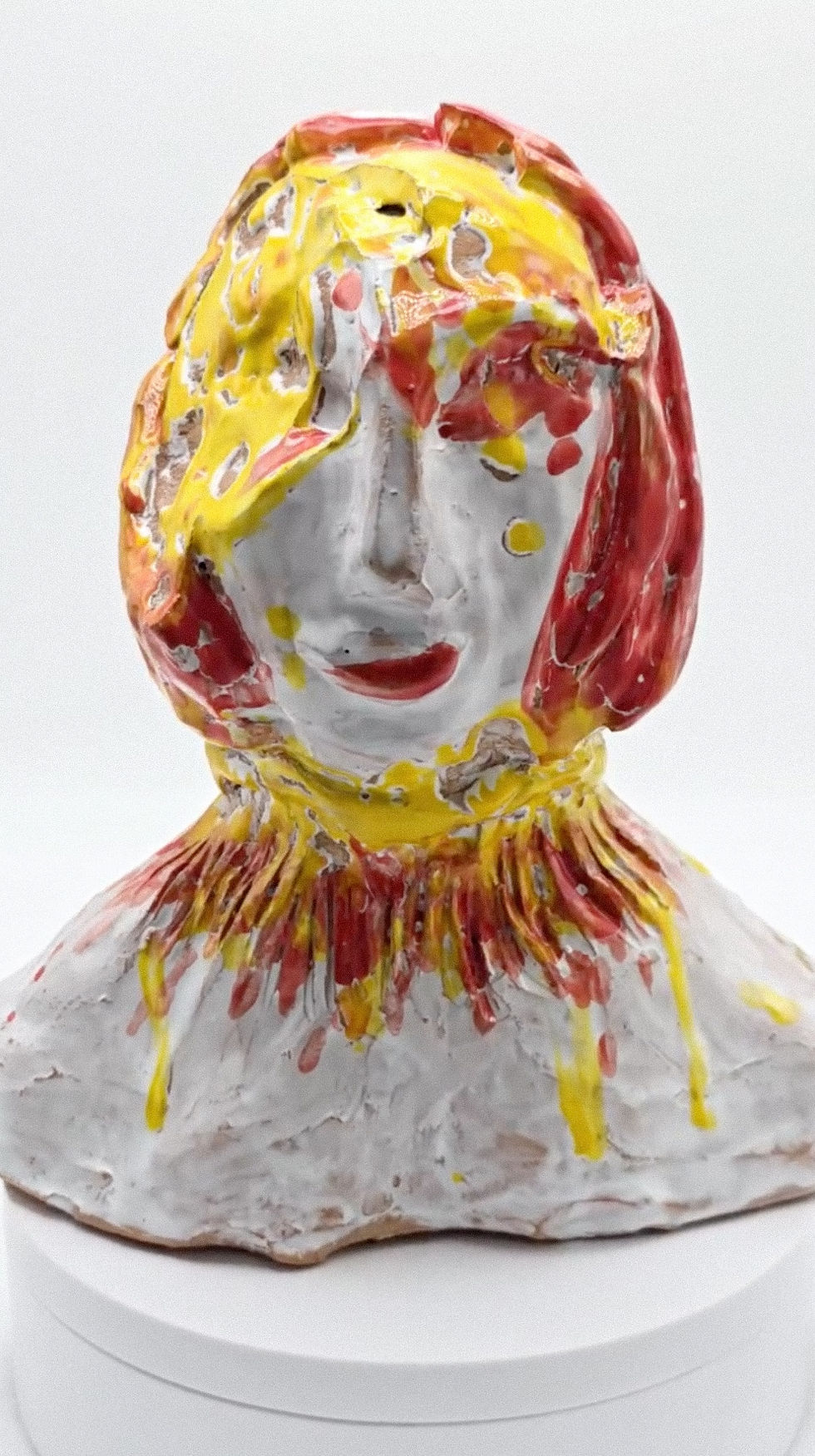
Title: FIRE PORTRAIT
Year: 2026
Medium: Ceramic

Title: FIRE PORTRAIT
Year: 2026
Medium: Ceramic

Title: Leonardo Glauso’s Trinus Mundi at the Gorgona Prize — Exhibited at Fondazione Uberti
Year: 2026
Medium: Ceramic

Leonardo Glauso with Trinus Mundi at Fondazione d’Arte Trossi-Uberti for the Gorgona Prize