

MEDUSA, LA GORGONE
Art Prize
2026

EXHIBITION
DATE
23 July 2026 – 9 August 2026
LOCATION
Fondazione d’Arte Trossi-Uberti in Livorno
The third edition brought together contemporary art, theatre and cultural dialogue at Villa Trossi-Uberti from 23 July to 9 August 2026.
LIVORNO — The third edition of MEDUSA, LA GORGONE Art Prize concluded on 9 August 2026 at the Fondazione d’Arte Trossi-Uberti in Livorno. Centred on the theme Il Ritorno dello Sguardo — The Return of the Gaze, the programme unfolded through three principal events: the exhibition opening, the presentation of the publication Il Teatro del Mare, and the official awards ceremony.
Works Showcase

Veronica Socci 2026 Digital photography and graphic processing 20 × 30 cm

Lucia Mattioli 2025 Digital painting 29.7 × 42 cm

Leonardo Glauso CERAMIC SCULPTURE 2026 15 × 23 cm
Veronica Socci 2026 Digital photography and graphic processing 20 × 30 cm
ARTIST
Riccardo Aleandri · Melissa Arena · Alessandro Botticelli · Carmen Cánovas ·Kirio Cho · Andrea del Sere · Rosalba Di Pierro · Yuliya Faccin · Federica Farinazzo · Gianluca Fascetto · Leonardo Glauso · Tian Hang · Enzo Lauria · Ziwen Li · Katrin Loy · Lucia Mattioli · Jennifer McConnell · Hugo Meng · Joanna Napiórkowska ·Marina Novikova · María Onaindia Zuretti · Rita Pedullà · Eugenia Polyakova · Carolina Romani · Rosendo Sánchez · Veronica Socci · Vladimir Tomić · Anna Vishenskaya · Qiuxin Wang · Ya Wang
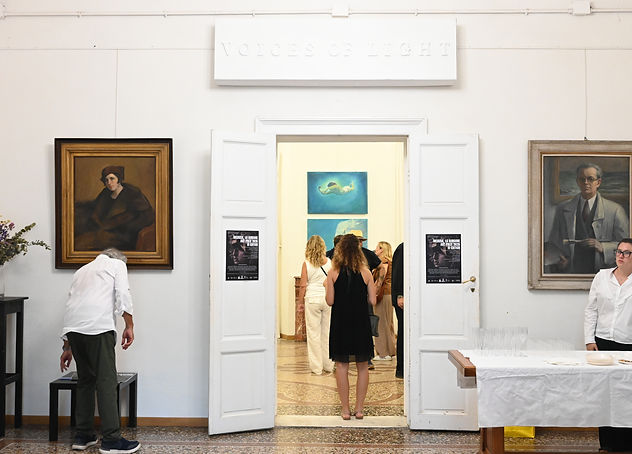
The exhibition officially opened on 23 July at Villa Trossi-Uberti, bringing together contemporary artistic practices and different cultural perspectives within a shared space for research and exchange.
Through its central theme, The Return of the Gaze, the exhibition invited audiences to reconsider the relationship between perception, experience and artistic representation. The participating works reflected a range of visual languages and approaches, creating a dialogue between individual artistic research and the wider cultural questions addressed by the project.
The exhibition was curated and organised by the Associazione Nazionale di Belle Arti d’Italia (ANBAI), ISOLART ART CENTER and Associazione NOMYA, in collaboration with the Fondazione d’Arte Trossi-Uberti, with the patronage of the Regione Toscana and the Comune di Livorno.

On 27 July, the programme continued with the presentation of Il Teatro del Mare. Le arti sceniche nell’isola di Gorgona.
Il Teatro del Mare is a prison-theatre project conceived and directed by Gianfranco Pedullà and produced by Compagnia Teatro Popolare d’Arte within the Casa di Reclusione dell’Isola di Gorgona, with the support of the Regione Toscana. The project explores theatre as a space for expression, education and human encounter within the particular social and cultural context of the Island of Gorgona.

The presentation brought together guests and project participants from the fields of theatre, photography, education and prison-based cultural practice. Those present included Chiara Migliorini, actress and director; Alessandro Botticelli, photographer; Anita Donzellotti, actress; Valerio and Daniele, detained actors involved in the project, whose surnames are omitted for privacy; Dr Alessia La Villa, legal-pedagogical officer (funzionario giuridico-pedagogico); Carlo Mazzerbo, former director of the Gorgona Island prison, a detached section of the Le Sughere prison complex; and Veronica Carpita, director of the Fondazione d’Arte Trossi-Uberti.

Their participation transformed the presentation into a direct exchange among theatre practitioners, institutional professionals, project participants and the public. The meeting offered an opportunity to consider the role that theatre and the arts can play in education, personal expression and social dialogue.
The photographic research of Alessandro Botticelli, closely connected to Il Teatro del Mare and the theatrical work developed on Gorgona, also formed an important point of connection between the publication and the wider themes of the exhibition.

Awards ceremony of the third edition
Following the book presentation, the official awards ceremony of MEDUSA, LA GORGONE Art Prize 2026 took place at 19:00.
The distinctions of the third edition were awarded as follows:
• MEDUSA Grand Prize: Alessandro Botticelli
• First Prize: Ya Wang
• Second Prize: Melissa Arena and Tian Hang
• Third Prize: Leonardo Glauso
• Honorable Mention: Yuliya Faccin and Qiuxin Wang
• Outstanding Visual Award: Veronica Socci

The MEDUSA Grand Prize was awarded to Alessandro Botticelli in recognition of the quality and coherence of his photographic language, his ability to move beyond a purely documentary approach, and the human and social depth of the project.
The work also establishes a direct connection with the central themes of MEDUSA, LA GORGONE Art Prize 2026: the gaze, the mask, identity, metamorphosis, vulnerability and resistance.
As in the mythological figure of Medusa, the gaze in Botticelli’s work is never neutral. It can define, expose or imprison, but it can also restore presence and recognition. Through photography, the theatrical experience on Gorgona becomes a broader reflection on art’s capacity to transform the way in which a person is seen and represented.

Yuanqi Cao and Rossella Tesi said in a joint statement:
“We awarded the MEDUSA Grand Prize to Alessandro Botticelli not only because Il Teatro del Mare documents an important artistic experience, but because it transforms that experience into an autonomous and compelling visual language. Through the gaze, the mask, the body and the sea, the work examines identity and transformation, bringing together photographic quality, social memory and human dignity within a single narrative.”

Through the exhibition, the presentation of Il Teatro del Mare and the awards ceremony, MEDUSA, LA GORGONE Art Prize 2026 created a meeting point between contemporary artistic research, theatrical practice and lived social experience.
The programme reaffirmed the project’s commitment to supporting artistic research, encouraging dialogue between different disciplines and cultures, and presenting contemporary art within an international and socially engaged context.
